
Boulder County Colorado Fairgrounds Events
The Boulder County Fairgrounds in Longmont, Colorado, brings together the county’s agricultural traditions, youth livestock programs, equestrian events, community gatherings, and annual summer fair. Located at 9595 Nelson Road, the grounds serve both rural families involved in agriculture and residents looking for local entertainment throughout the year.
The property is more than a once-a-year fair venue. Its indoor and outdoor arenas, exhibition spaces, barns, campground, and open areas accommodate a changing calendar of activities. The Boulder County Fair remains its signature event, combining livestock exhibitions and youth competitions with carnival rides, live music, rodeo performances, and other grandstand attractions.
For visitors planning a trip, the most important details are the annual fair dates, the location of individual activities, parking arrangements, and whether a particular event requires a separate ticket. For exhibitors and vendors, understanding the distinction between the county-operated facilities and the organization that produces the fair is equally useful.
Overview of Boulder County Fairgrounds

Location and physical layout
The Boulder County Fairgrounds are located at 9595 Nelson Road, Longmont, CO 80501, in eastern Boulder County. The property is bounded by Nelson Road, Hover Road, also known as 95th Street in the area, and Boston Avenue. It occupies approximately 83 acres, according to the county’s fairgrounds planning information.
The grounds include an outdoor arena, indoor arena, exhibition building, livestock barns, picnic shelter, parking areas, and an RV campground. These facilities allow different activities to take place at the same time, from animal shows inside the barns to equestrian competitions in the arenas and public gatherings in the exhibition spaces.
Fairgoers should check the event layout before arriving. A livestock show, farmers market, rodeo, and commercial exhibition may use different entrances or parking areas even though they share the same street address.
Who operates the fairgrounds?
Boulder County manages the property through its county government and fairgrounds operations. The annual Boulder County Fair is organized separately by the Boulder County Fair organization, which rents the facilities from the county and coordinates the fair program.
This distinction matters when requesting a building rental, asking about campground rules, or applying to participate in the annual fair. Facility questions belong with the county fairgrounds office, while fair competitions, carnival arrangements, entertainment, and exhibitor applications are handled through the fair organization.
Why the grounds matter to Boulder County
Boulder County includes urban communities such as Boulder and Longmont as well as agricultural properties, horse facilities, and rural areas along the plains and foothills. The fairgrounds provide a shared venue where those different parts of the county meet.
The annual fair gives 4-H and FFA participants a place to present their projects, while year-round livestock and horse events support the area’s agricultural and equestrian communities. The property also serves as an emergency-response resource when countywide incidents require a large, accessible staging or support location.
Upcoming Events at Boulder County Fairgrounds

The fairgrounds host activities throughout the year, so visitors should not assume the property is inactive outside August. The county’s event calendar lists livestock shows, dog events, horse competitions, 4-H programs, farmers markets, and public gatherings.
Annual fair and summer entertainment
The Boulder County Fair is the main annual attraction. Its summer program combines agricultural exhibits with carnival entertainment, live music, family activities, and ticketed grandstand events. The 2026 program included a CPRA rodeo, tractor pull, demolition derby, and Mexican rodeo, alongside livestock activities and live performances.
Year-round event categories
Depending on the schedule, visitors may find:
- Livestock shows and 4-H animal competitions.
- Horse shows, dressage clinics, barrel racing, and mounted-shooting events.
- Dog agility trials and other animal-related gatherings.
- Longmont Farmers Market dates in the fairgrounds’ north parking lot.
- Trade shows, auctions, community expos, craft events, and indoor exhibitions.
- Fundraisers, private gatherings, meetings, and outdoor recreational events.
These are examples of activities associated with the property, not a guarantee that every category will appear on the next calendar.
Seasonal patterns
Spring and early summer bring opportunities for animal shows, horse competitions, and outdoor arena events. The county fair is a major summer gathering, while indoor buildings remain useful for activities scheduled outside the main fair season. Farmers markets operate on selected dates, and fall and winter bookings depend on the organizers and facilities involved.
For upcoming events, consult the Boulder County Fairgrounds calendar maintained by the county. For fair competitions, carnival schedules, entertainment, and exhibitor information, check with the Boulder County Fair organization. This is particularly important for changes to event hours, ticketed performances, and weather-sensitive activities.
Facility rentals and private events
The property accommodates more than public fair programming. Depending on availability and the type of event, buildings, arenas, and other spaces can serve exhibitions, animal shows, meetings, picnics, and community gatherings. Organizers should contact the county fairgrounds office to discuss the intended use, capacity requirements, setup time, insurance, and fees rather than assuming a particular building is available.
The Boulder County Fair

When is the fair held?
The Boulder County Fair is one of Colorado’s oldest agricultural fairs. Its annual program generally takes place in summer, with dates and activities varying by year.
The 2026 Boulder County Fair ran August 5–9, 2026. The next published fair dates are August 11–15, 2027. The fair’s kickoff parade is a separate event scheduled for Saturday, August 1, in downtown Longmont in 2026; visitors should not confuse the parade date with the opening of the fairgrounds.
Livestock, agriculture, and creative exhibits
Agricultural competitions are central to the fair’s identity. Youth exhibitors prepare animals and projects well before fair week, then present their work for judging. Depending on the year’s premium book and entry classes, animal projects may include beef cattle, sheep, goats, swine, poultry, rabbits, and other approved livestock categories.
The fair also highlights the work of young people and community members through agricultural projects, creative exhibits, and educational activities. Arts, photography, baking, needlework, gardening, and other household or craft categories may be available when listed in the relevant year’s competition guide.
Exhibitors should read the current premium book carefully. It sets the actual classes, eligibility rules, paperwork requirements, check-in times, and deadlines; a category that appeared in a previous year is not automatically available in the next fair.
Carnival rides, food, and entertainment
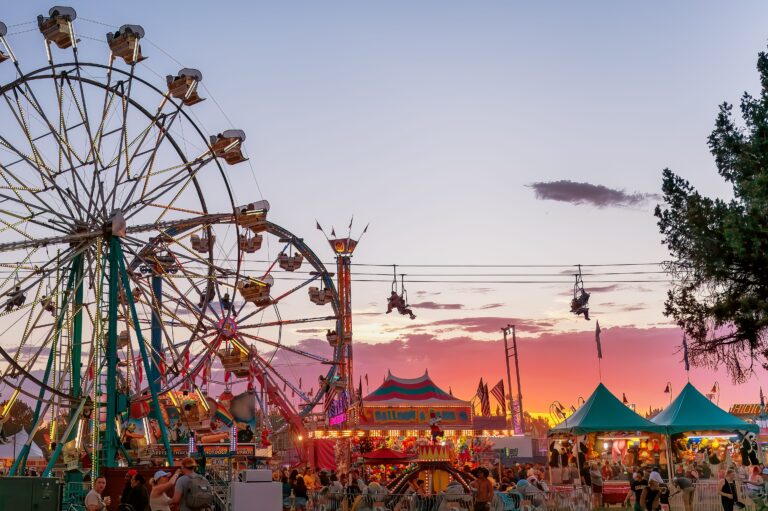
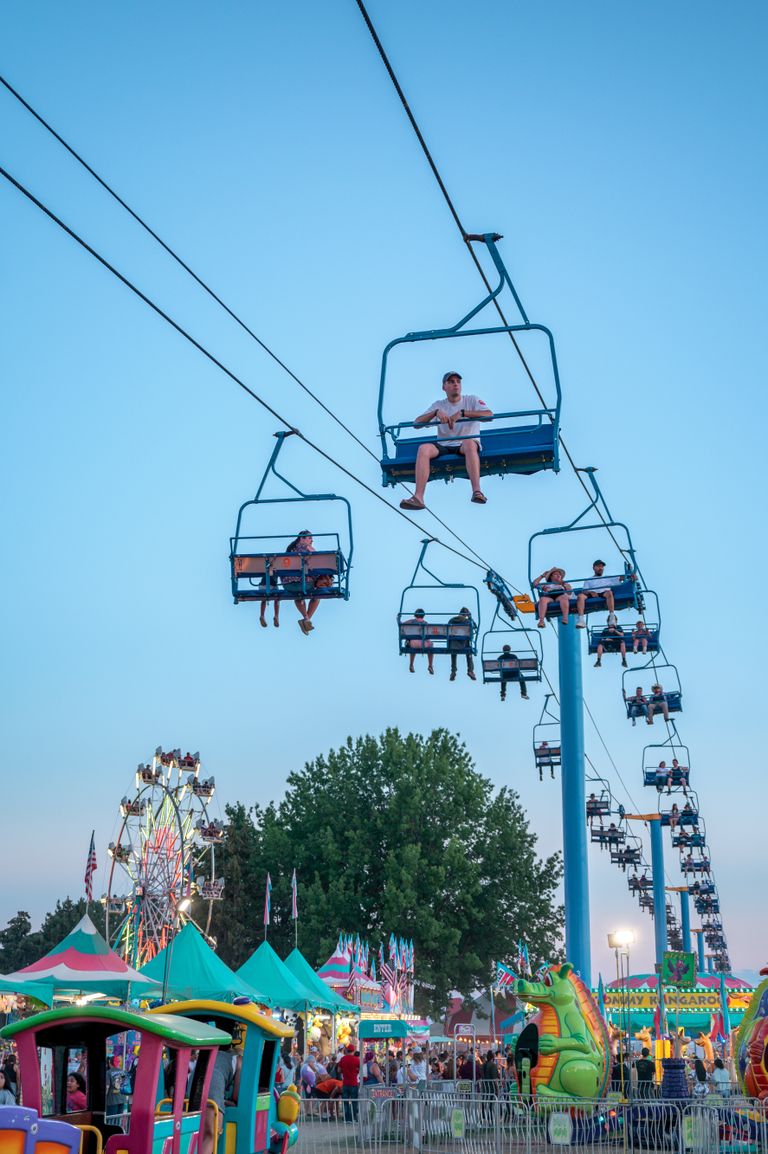
The carnival is a major attraction for families, with rides and midway activities operated according to the fair’s published schedule. Wristband offers and discounted ride periods may be available on designated days. Carnival purchases can use an electronic token system, so visitors should review the current instructions before buying ride access.
Fair food, community food stands, and local vendors add another layer to the experience. The Dairy Bar is a familiar part of the fair program, and food options vary with participating vendors. Visitors can expect the usual fairground mix of meals, snacks, and treats, but specific menus and prices should be confirmed on site.
Grandstand entertainment has included rodeo events, tractor pulling, and demolition derby competitions. Live music and family activities are also part of the program. Some attractions may require separate tickets even when general fair entry is free.
Admission and parking
The 2026 fair was advertised as free to attend, with free parking. That makes it possible to visit the grounds without buying a general admission ticket, although selected grandstand events, rides, food, and other activities can cost extra.
The fair organization publishes operating hours and attraction schedules closer to the event. Check those details before traveling, especially if you are visiting for one particular performance or competition.
Facilities and Grounds

The 83-acre property is designed for multiple types of events rather than a single annual gathering.
Exhibition buildings, barns, and arenas
The main facilities include an exhibition building for indoor events, livestock barns, an indoor arena, and an outdoor arena. These spaces support animal competitions, equestrian activities, exhibitions, and grandstand-style programming. A picnic shelter provides an additional venue for certain gatherings.
The county does not publish a single verified seating capacity that applies to all arena configurations. Event organizers should confirm usable capacity and seating arrangements for their specific booking.
RV camping
The fairgrounds campground provides RV and camper sites at 9595 Nelson Road. The county lists a $35 nightly camping fee and a $15 dump-station fee. Water is seasonal, and restrooms and showers are available to paid campers from March through October.
Sites are first-come, first-served; reservations are not accepted. Tent and car camping are prohibited, and stays are limited to 14 days per calendar year. Guests should confirm current rates and campground rules before arrival because fees and operating conditions can change.
Parking, accessibility, and amenities
Parking arrangements vary with the event. During the county fair, general parking was advertised as free in 2026, but visitors attending other events should check the organizer’s instructions for designated lots and overflow arrangements.
The site has restrooms in several buildings and arenas, along with portable facilities during larger events. The exact location of accessible parking, routes, and restrooms should be checked against the current event map, particularly when an activity uses temporary layouts or closes certain areas.
Visitors should not assume that every building is open during every event. Food services, ATMs, first-aid arrangements, and other amenities may vary according to attendance and the organizer’s setup.
Visitors exploring Boulder County Colorado Fairgrounds Events can also discover local celebrations through Bent County Colorado Fairgrounds Events. Exploring both counties provides opportunities to learn about community traditions, discover seasonal gatherings, and enjoy activities that highlight local culture.
Vendor and Exhibitor Information
Applying for a commercial booth
Businesses, makers, food vendors, and community organizations interested in the Boulder County Fair should contact the fair organization about commercial booth applications. Availability, booth dimensions, electrical access, food-service requirements, insurance, and fees depend on the space and event.
For other events held at the grounds, vendor applications may be managed by the individual promoter rather than the county or annual fair organization. Ask which organization controls the event before submitting payment or paperwork.
Entering competitive exhibits
Livestock exhibitors and people entering arts, crafts, baking, gardening, or other judged categories should obtain the current fair premium book. It identifies eligible classes, age groups, entry procedures, check-in dates, judging times, and any required health documentation for animals.
Do not rely on last year’s deadlines. Livestock health requirements and paperwork can be particularly time-sensitive, and late entries may not be accepted.
Fair contacts
For the fairgrounds property, contact the county at 303-678-6235 or [email protected].
For annual fair programming, vendors, exhibitors, and grandstand events, the Boulder County Fair organization can be reached at 720-864-6460. Confirm that you are contacting the correct office for the service you need.
Getting to Boulder County Fairgrounds
Driving directions
The fairgrounds are on Nelson Road in Longmont, near the intersection of Nelson and Hover roads.
- From Interstate 25: Take the Longmont or Highway 119 route west into Longmont. Highway 119 becomes Ken Pratt Boulevard. After crossing the railroad tracks, turn right onto Nelson Road and continue toward the fairgrounds.
- From Boulder: Travel northeast on the Diagonal Highway toward Longmont, then turn onto Hover Road and head north toward the fairgrounds.
- From central Longmont: Use local streets to reach Nelson Road or Hover Road, following the entrance and parking instructions for your event.
Traffic can build up around the grounds during the county fair and major arena events. Allow extra time for parking, and follow temporary traffic-control signs rather than relying exclusively on navigation directions.
Public transportation and rideshare
Visitors coming from elsewhere in Boulder County should check current regional transit schedules for service to Longmont and onward connections. A direct transit connection to a particular fairgrounds entrance should not be assumed.
Rideshare passengers should agree on a pickup point that does not obstruct traffic or event entrances. During large gatherings, designated drop-off locations may differ from ordinary parking access.
4-H and FFA at Boulder County Fairgrounds
The fair gives young people involved in agriculture a public setting to demonstrate their knowledge, preparation, and responsibility. Participants spend months caring for animals, completing project records, learning presentation skills, and preparing exhibits for evaluation.
Boulder County’s 4-H programming works through the local Colorado State University Extension system. The annual fair provides an opportunity for youth to present approved projects, take part in judging, and connect with other participants and community members. FFA members may also participate through agricultural education and school-based programs, subject to the fair’s eligibility rules.
Junior livestock auction
A junior livestock auction gives eligible youth exhibitors an opportunity to present market animals to prospective buyers. Buyers may include individuals, businesses, and community supporters. The exact animal classes, auction time, registration process, and payment arrangements are determined by the current fair program.
Purchasing an animal at an auction is a financial commitment, not simply a donation. Prospective buyers should ask about bidding procedures, payment deadlines, animal disposition, and how proceeds are credited to the exhibitor. The fair’s current rules explain how the sale supports youth participants and their projects.
Special Events Beyond the Annual Fair

The grounds remain useful to Longmont and the wider county after the fair ends. Horse shows, dressage clinics, barrel racing, mounted-shooting events, dog agility trials, livestock activities, farmers markets, auctions, and indoor exhibitions have all appeared in the property’s event programming.
Community groups and outside organizers may also use the facilities for fundraisers, meetings, recreational activities, and public gatherings. However, a category should not be treated as a confirmed upcoming event until it appears on the current calendar.
Gun shows, swap meets, motocross, ATV events, and seasonal festivals should likewise be checked individually rather than assumed to be recurring attractions. The most reliable approach is to confirm the event name, organizer, venue within the grounds, admission requirements, and date before setting out.
History of Boulder County Fairgrounds

The Boulder County Fair began in 1869, when Colorado was still a territory. Early organizers established an agricultural exhibition to showcase local farming, livestock, machinery, minerals, produce, and household work. Horse racing and other competitions became part of the event as it developed.
The fair moved to Longmont’s Driving Park, later known as Roosevelt Park, in the late nineteenth century. The fair’s agricultural character continued even as attendance and entertainment expanded. Homemade pumpkin pie became part of the community’s early fair tradition, reflecting the involvement of local residents as well as farmers and ranchers.
As the event grew, the Roosevelt Park site became increasingly crowded. Boulder County acquired a 130-acre property in 1976 for a new complex, and the fairgrounds moved to their current Nelson Road location in 1978. The modern property was subsequently developed into a multipurpose venue for fairs, livestock activities, public events, and emergency operations.
The fair has also experienced interruptions. Its historical record identifies a cancellation in 1946 because of a polio outbreak. That break illustrates how public health concerns have affected even long-running community traditions. Today, the fair continues to connect the county’s agricultural past with contemporary entertainment and youth education.
Frequently Asked Questions
1. When is the Boulder County Fair in 2026–2027?
The 2026 Boulder County Fair ran August 5–9, 2026. The next published dates are August 11–15, 2027. Confirm the final schedule before traveling.
2. What time does Boulder County Fairgrounds open?
Opening times depend on the event and facility. During the 2026 fair, published schedules varied by day and attraction. Check the current fair hours or the listing for the specific event you plan to attend.
3. Is there camping at Boulder County Fairgrounds?
Yes. The county operates an RV and camper campground at 9595 Nelson Road. Sites are first-come, first-served, with no reservations. Tent and car camping are not permitted.
4. How do I enter livestock in the Boulder County Fair?
Obtain the current fair premium book and follow its entry deadlines, eligibility requirements, animal health rules, and check-in instructions. Contact the fair organization or the relevant 4-H or Extension program for guidance.
5. Are dogs allowed at Boulder County Fairgrounds?
Rules depend on the event and the area being used. Service animals are subject to applicable access laws, while pet restrictions may apply during the fair and livestock competitions. Confirm the policy before bringing a pet.
6. Where do I park at Boulder County Fairgrounds?
Parking is available in designated fairgrounds lots, with arrangements varying by event. General parking was free during the 2026 county fair. Follow event signage for accessible spaces, entrance routes, and any overflow parking.
7. Who do I contact to rent Boulder County Fairgrounds?
Contact the Boulder County Fairgrounds office at 303-678-6235 or [email protected]. Explain the event type, preferred date, expected attendance, and facilities needed.
8. How much does admission to the Boulder County Fair cost?
General admission and parking were free for the 2026 fair. Carnival rides, selected grandstand events, food, and other purchases may cost extra. Confirm the arrangements for the year you plan to visit.
9. Does Boulder County Fairgrounds host events outside fair week?
Yes. The property hosts scheduled horse and livestock events, dog shows, farmers markets, exhibitions, auctions, and community gatherings throughout the year. Individual event dates and access arrangements vary.
10. How can I become a vendor or exhibitor?
For the annual fair, contact the Boulder County Fair organization about commercial booths and competitive exhibits. For other events, contact the individual promoter or the county fairgrounds office to determine who manages applications.
One Comment