San Joaquin County California Fairgrounds Events
The San Joaquin County Fairgrounds in Stockton, California, is a year-round event destination with roots in the county’s agricultural history. Located on South Airport Way near California State Route 99, the grounds host the annual San Joaquin County Fair, livestock exhibitions, dirt-track racing, flea markets, concerts, trade shows, and community gatherings.
Unlike a fairground that operates mainly during a single summer week, Stockton’s facility remains active throughout the year. Visitors can come for a weekend racing program, browse the regular flea market, attend a youth livestock event, or rent an exhibition building for a public or private gathering.
The property is operated by the Second District Agricultural Association, a state-associated fair organization responsible for the fairgrounds and its facilities. The best way to plan a visit is to distinguish the annual county fair from the separate events held at the same address, since admission prices, schedules, parking arrangements, and age restrictions can differ.
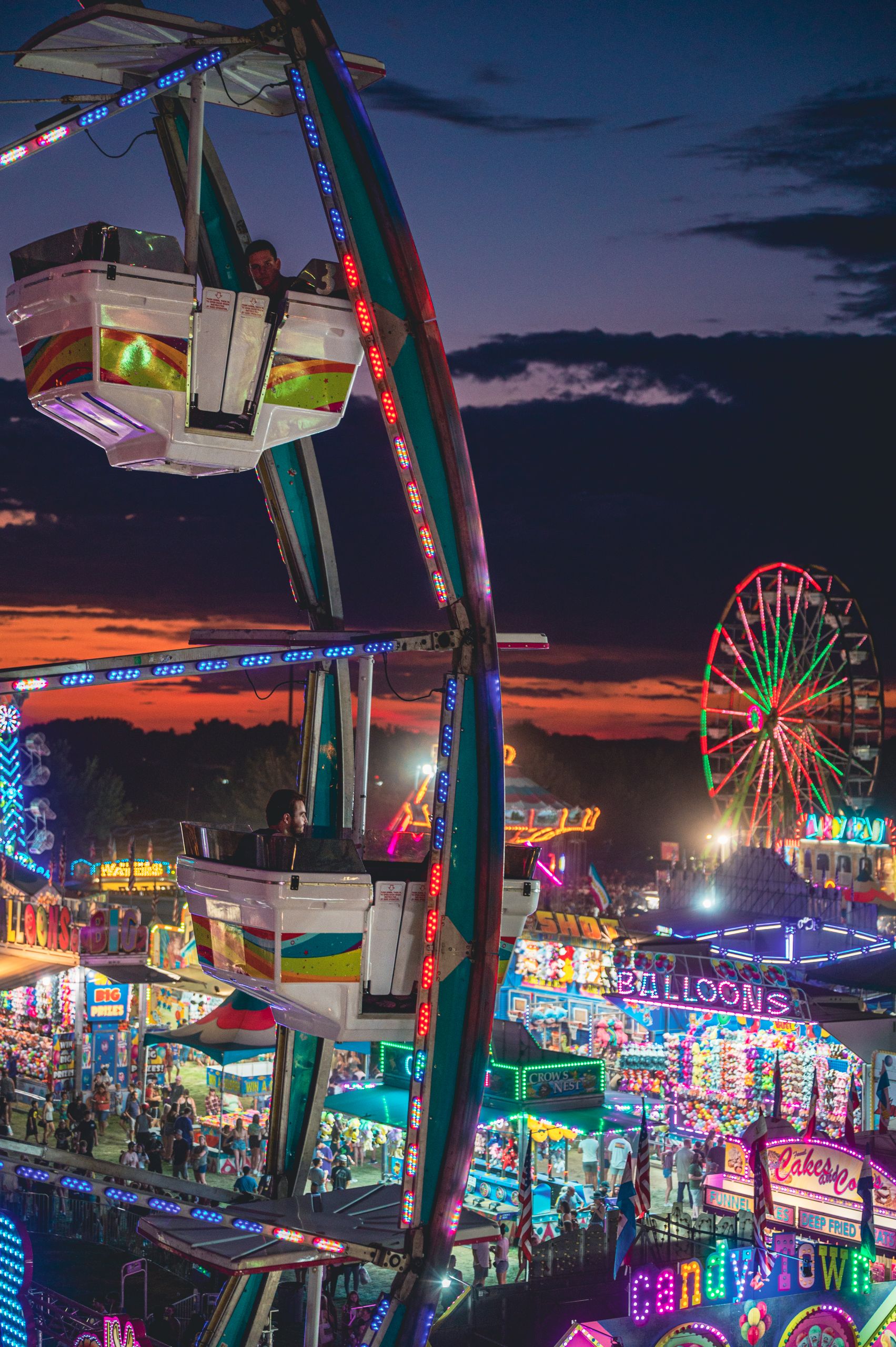
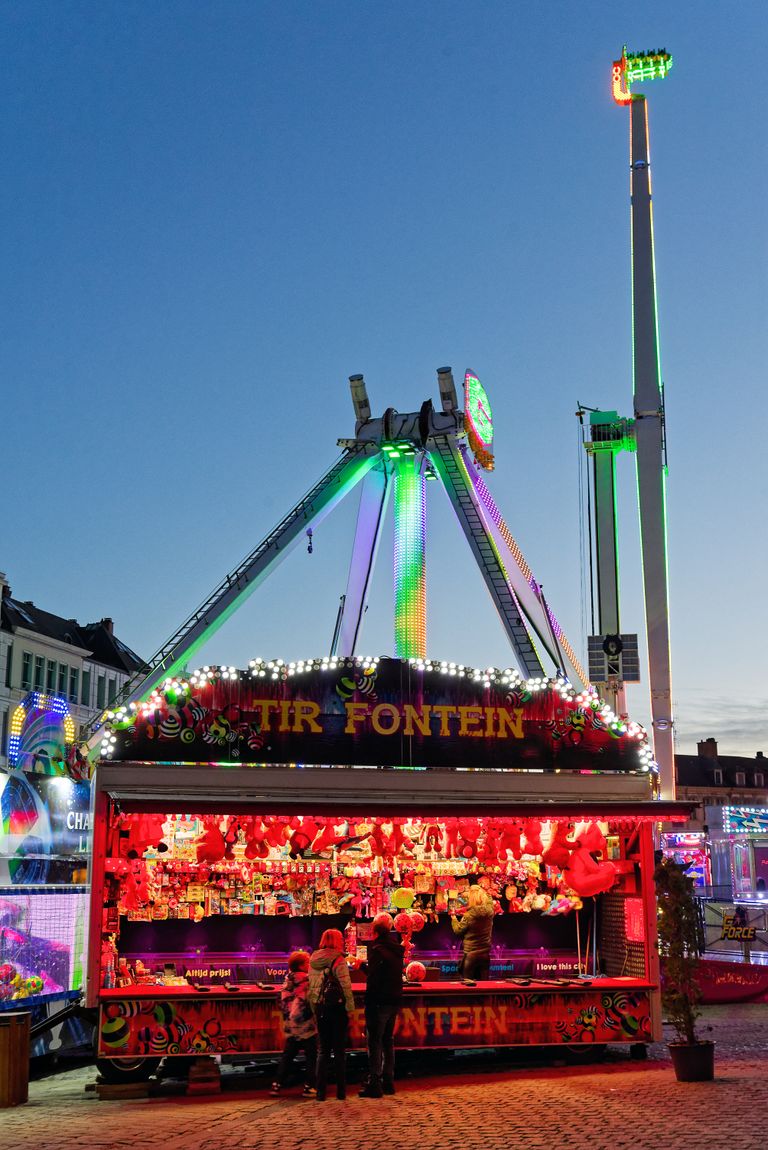
Photo 1: San Joaquin County Fair midway

Overview of San Joaquin County Fairgrounds

Location and physical layout
The San Joaquin County Fairgrounds is located at 1658 S. Airport Way, Stockton, CA 95206, near the intersection of Airport Way and Martin Luther King Jr. Boulevard, also known locally as Charter Way. The property sits in Stockton, the county seat of San Joaquin County, in California’s northern San Joaquin Valley.
The grounds cover approximately 252 acres and contain six major exhibition buildings, livestock facilities, a grandstand, a racetrack, extensive parking areas, and open spaces for outdoor events. Published facility information describes parking for approximately 5,000 vehicles and grandstand seating for around 3,800 people. These figures are facility-wide estimates, not a guarantee of available spaces or seating at every event.
Who operates the fairgrounds?
The facility is associated with California’s Second District Agricultural Association (Second District Agricultural District). The organization oversees fairground operations, event programming, and facility rentals. Separate event organizers manage some activities, including youth agricultural shows and racing programs.
The fairgrounds opened in 1860, giving the site a history that extends back to the early development of organized agricultural exhibitions in the Central Valley. Its continuing role reflects the region’s combination of farming, livestock production, transportation, and a growing urban population.
For Stockton residents, the fairgrounds serve two purposes: preserving agricultural traditions through livestock and youth competitions while providing space for modern entertainment, commercial events, and community gatherings.
Upcoming Events at San Joaquin County Fairgrounds
What happens throughout the year?
The grounds host considerably more than the annual county fair. Established activities and recurring event categories include:
- Dirt-track racing and speedway programs.
- Stockton flea markets and automotive swap meets.
- Youth livestock exhibitions and agricultural auctions.
- Trade shows, cultural festivals, and community expos.
- Touring family entertainment, concerts, and special performances.
- Private gatherings, commercial exhibitions, and rented indoor events.

The Stockton Dirt Track is a particularly distinctive feature. Racing events can include sprint cars and other dirt-track classes, with larger motorsports programs scheduled on selected dates. Delta Speedway and other motorsports-related businesses also contribute to the grounds’ year-round activity.
Seasonal patterns and how to check the schedule
Spring and summer often bring outdoor motorsports, agricultural programs, and major public gatherings. The youth-focused San Joaquin AgFest livestock program has traditionally been a significant June event. The fairgrounds also host flea markets and other activities outside the main fair season.
Do not assume that an event takes place simply because it appeared on a previous year’s calendar. Check the current fairgrounds event calendar, the relevant event organizer’s announcements, or the fair office before traveling. Event dates, gate times, ticket prices, and parking fees can change.
Can the grounds be rented?
Yes. The facility offers exhibition buildings and other spaces for eligible public and private events. Potential uses include trade shows, conferences, livestock sales, receptions, cultural programs, and commercial exhibitions.
Rental availability, insurance requirements, capacity limits, setup access, and fees depend on the specific building and event. Organizers should contact the fairgrounds office before advertising a booking or committing to vendors.
The San Joaquin County Fair
Fair dates and annual traditions
The annual San Joaquin County Fair is the principal county fair associated with the grounds. However, its current date information requires particular care: published 2026 listings are inconsistent, and a California state fair listing gives December 3–20, 2026, while regional event information has described the fair as a late-spring or early-summer event.
Consequently, the exact 2026–2027 fair dates should be confirmed directly with the fair office before making travel plans. A previous year’s dates are not a reliable substitute for an official current schedule.
Agricultural exhibits and competitions
Agricultural education remains an important part of the fairground’s identity. Depending on the published competition program, fair and youth-show exhibits can include beef cattle, sheep, swine, goats, poultry, rabbits, and other livestock, alongside arts, photography, crafts, horticulture, baking, and home-related projects.
Participants should consult the relevant year’s premium book for eligible classes, animal health requirements, weigh-in times, exhibit delivery, judging procedures, and entry deadlines. Not every competition is offered every year.
Carnival, food, and entertainment
When the fair includes a traditional midway, visitors can expect carnival rides, games, food vendors, and scheduled entertainment. The exact ride lineup, number of attractions, wristband offers, and ride restrictions depend on the contracted operator and the year’s program.
Fair food commonly includes familiar midway fare such as corn dogs, funnel cakes, grilled foods, snacks, and sweet treats. Specific vendors and special menu items should be confirmed for each edition rather than assumed from previous years.
Entertainment can include live music, local performers, family attractions, and other scheduled shows. Do not assume that a demolition derby, tractor pull, pageant, or particular concert is part of the fair unless it appears in the current program.
Admission and parking
The annual fair’s ticket prices, children’s admission rules, senior discounts, season passes, and parking charges must be checked against the current fair announcement. Other events on the same property set their own admission policies, so a racing ticket or flea-market visit should not be treated as having the same price structure as fair admission.
Facilities and Grounds
Exhibition halls, livestock barns, and grandstand
The fairgrounds’ six major buildings support indoor exhibitions, commercial events, and other scheduled activities. Several buildings have substantial floor space suitable for trade shows and large gatherings. The grounds also contain livestock barns and show-ring facilities used for agricultural events.
The grandstand serves motorsports and other outdoor entertainment. Seating capacity is commonly listed at approximately 3,800, although configurations and usable capacity can differ by event.
The property’s equestrian facilities are another notable feature. Regional venue information lists approximately 750 horse stalls across the grounds, but visitors arranging animal accommodation should confirm stall availability and access with the appropriate event organizer.
Visitors exploring San Joaquin County California Fairgrounds Events can also discover community gatherings through San Francisco County California Fairgrounds Events. Exploring both counties provides opportunities to learn about regional heritage, discover seasonal activities, and enjoy community celebrations throughout California.
Parking, camping, and accessibility
Parking is available in several areas of the property, with entrance arrangements varying by event. Some organizers use specific gates for exhibitors, livestock buyers, or general admission. Follow the event’s parking instructions rather than assuming every gate is open.
Camping and RV arrangements may be available for selected motorsports or other events. These are not necessarily available to ordinary fair visitors, and reservations may be required.
For accessible parking, wheelchair access, accessible restrooms, seating accommodations, and other disability-related arrangements, contact the fair office or event organizer before arrival. The availability and location of specific amenities should be confirmed for the particular building or event.
Food service, restrooms, first aid, cashless payment options, and other conveniences may vary by event. Visitors should bring any essential supplies and check event-specific rules on outside food, water bottles, and payment methods.
Vendor and Exhibitor Information
How to become a vendor
Businesses interested in a booth should first establish whether they are applying for the county fair, a flea market, a swap meet, or another event. These activities may have separate operators and application procedures.
Fair vendors should ask about:
- Booth sizes, rental costs, and included equipment.
- Application deadlines and product-category restrictions.
- Electricity, water, food preparation, and fire-safety requirements.
- Insurance certificates, permits, and vendor check-in.
- Setup, teardown, vehicle access, and overnight security.
The fair office can direct applicants to the appropriate contact. Vendors interested in the Stockton flea market should contact its operator separately.
Competitive exhibits and livestock entries
Livestock exhibitors and people entering non-animal exhibits should obtain the current premium book or entry packet. These materials explain class categories, eligibility, deadlines, judging rules, and any required forms.
Animal exhibitors should verify identification, vaccination or health documentation, arrival windows, bedding, feed, and stall assignments before transporting animals to Stockton. Late entries may not be accepted.
For general fairgrounds questions, the published contact details are (209) 466-5041 and [email protected]. Contact information and department responsibilities should be reconfirmed when arranging a specific booking or competition.
Getting to San Joaquin County Fairgrounds
Driving from Stockton and nearby cities
The main address is 1658 S. Airport Way, Stockton, CA 95206.
- From downtown Stockton: Travel south toward Airport Way and Martin Luther King Jr. Boulevard, following signs for the fairgrounds and the relevant event entrance.
- From Lodi: Take local routes toward Stockton and connect to the Airport Way area. Allow extra time during major events.
- From Manteca or Tracy: Use the regional freeway network toward Stockton, then follow the signed route to the fairgrounds.
- From Sacramento: Take the southbound freeway route toward Stockton and follow local directions to Airport Way.
- From Modesto: Travel north toward Stockton and use the appropriate local connection to the fairgrounds.
California State Route 99 is a major regional approach. The precise exit and final approach depend on your starting point and traffic conditions, so check current navigation before leaving.
Public transportation and rideshare
Visitors should check current local transit services for routes serving the Airport Way area; a dedicated fair-week shuttle should not be assumed without an announcement. Rideshare passengers should arrange pickup and drop-off at the designated event entrance, especially when traffic controls or road closures are in place.
Arrive early for large racing events, livestock auctions, and major public shows. Different gates may be used for vendors, livestock exhibitors, buyers, and general admission.
4-H and FFA at San Joaquin County Fairgrounds
Youth agricultural programs are central to the fairgrounds’ educational purpose. San Joaquin AgFest provides a setting where young exhibitors can present livestock, demonstrate animal husbandry, and participate in organized agricultural competitions.
Local 4-H members develop practical skills through raising and caring for animals, recordkeeping, project presentations, and judging. Future Farmers of America (FFA) students can also participate through school-based agricultural education programs. Specific club and chapter participation varies by year, and a complete current roster should be confirmed with local program coordinators.
How the junior livestock auction works
A junior livestock auction gives eligible youth exhibitors an opportunity to sell animals raised as part of their agricultural projects. At San Joaquin AgFest, published auction programs have included beef, sheep, goats, poultry, swine, and rabbits, with separate show rings and scheduled sale times.
Buyers register, receive the appropriate sale information, and bid according to the auction’s rules. Businesses, families, and community supporters may be eligible to participate after completing the required registration. Proxy purchasing and additional buyer contributions may be available under the program’s terms.
The auction provides a practical connection between young agricultural producers and the wider Stockton business community. Participants should consult the current buyer guide for registration, billing, animal pickup, processing arrangements, and any rules governing proceeds. Exact payment distribution can differ according to the sale and exhibitor agreement.
Special Events Beyond the Annual Fair

Flea markets and swap meets
The Stockton flea market is one of the site’s recurring attractions. Published visitor information describes regular market days on Monday, Wednesday, and Thursday, generally from 6 a.m. to 2 p.m., with free admission reported for shoppers. Hours, vendor counts, and operating arrangements should be checked before visiting.
Automotive swap meets and car shows are another established use of the grounds. These events appeal to classic-car enthusiasts, collectors, mechanics, and people searching for parts or automotive memorabilia.
Motorsports and family entertainment
The Stockton Dirt Track hosts scheduled racing programs, while other motorsports facilities on the property provide additional activities. Some events feature special racing series, monster trucks, or tractor pulls. These are separate ticketed programs, and their schedules should be checked individually.
The fairgrounds also accommodate cultural celebrations, touring entertainment, exhibitions, and community fundraisers. Past calendars have included Hmong New Year celebrations, expos, circus performances, and other family or community events. Past listings demonstrate the range of events held here, not a guarantee that any particular event will return.
History of San Joaquin County Fairgrounds
The fairgrounds’ recorded history dates to 1860, when agricultural fairs helped connect producers, livestock breeders, merchants, and residents across California’s Central Valley. As Stockton developed into an important regional commercial and transportation center, the grounds continued to serve both agricultural and public-event needs.
The property’s modern role has expanded well beyond traditional livestock and crop exhibitions. Permanent exhibition buildings, racetrack facilities, livestock barns, and large parking areas support year-round use by private promoters and community organizations.
The annual fair has also faced interruptions. Reporting on the fair’s return in 2023 described the revival of a summer tradition after a two-year break. This illustrates the event’s importance to local merchants, fairgoers, and community groups. Specific attendance records, historical cancellations, and claims about notable visitors should be verified through historical records before being repeated as established facts.
Today, the fairgrounds remain a working public-event venue where agricultural education, motorsports, commercial activity, and community traditions share the same property.
Frequently Asked Questions
When is the San Joaquin County Fair in 2026 or 2027?
The exact dates require confirmation. A state fair listing currently gives December 3–20, 2026, while regional event information has described a late-spring or early-summer schedule. Contact the fair office to verify the dates before planning a visit.
What time does San Joaquin County Fairgrounds open?
There is no single opening time for every event. Office hours, flea-market hours, racing gates, and fair admission hours can differ. Check the schedule for the specific activity you plan to attend.
Is there camping at San Joaquin County Fairgrounds?
RV spaces and camping arrangements have been offered for selected events, including motorsports programs. Availability, prices, hookups, and reservations depend on the event. Contact the relevant organizer before arriving with an RV.
How do I enter livestock in the San Joaquin County Fair?
Obtain the current livestock entry packet or premium book and follow its eligibility, paperwork, animal-health, and deadline requirements. For AgFest-specific livestock questions, contact the livestock show organizers.
Are dogs allowed at San Joaquin County Fairgrounds?
Do not assume pets are permitted. Animal policies can vary by event, and livestock areas may have additional restrictions. Confirm the current policy with the organizer before bringing a dog. Service animals are subject to applicable accessibility laws.
Where do I park at San Joaquin County Fairgrounds?
The grounds have multiple parking areas, with the entrance and parking arrangements determined by the event. Follow the signs and instructions provided with your admission information. Parking charges may apply even when event admission is free.
Who do I contact to rent San Joaquin County Fairgrounds?
Contact the fairgrounds office at (209) 466-5041 or [email protected] to ask about buildings, outdoor areas, availability, rental costs, and insurance requirements.
How much does it cost to attend the San Joaquin County Fair?
Admission prices vary by year and event. General admission, carnival wristbands, special entertainment, and parking may be charged separately. Check the current fair announcement for confirmed prices rather than relying on previous years’ rates.
What events are held at San Joaquin County Fairgrounds besides the fair?
The grounds host flea markets, auto swap meets, dirt-track racing, livestock shows, agricultural auctions, trade shows, cultural festivals, touring entertainment, and private events throughout the year.
Does San Joaquin County Fairgrounds have facilities for vendors?
Yes. The property includes exhibition buildings and spaces that can accommodate commercial and public events. Vendors should contact the fairgrounds or the individual event organizer to confirm availability, application procedures, fees, and operating requirements.
One Comment