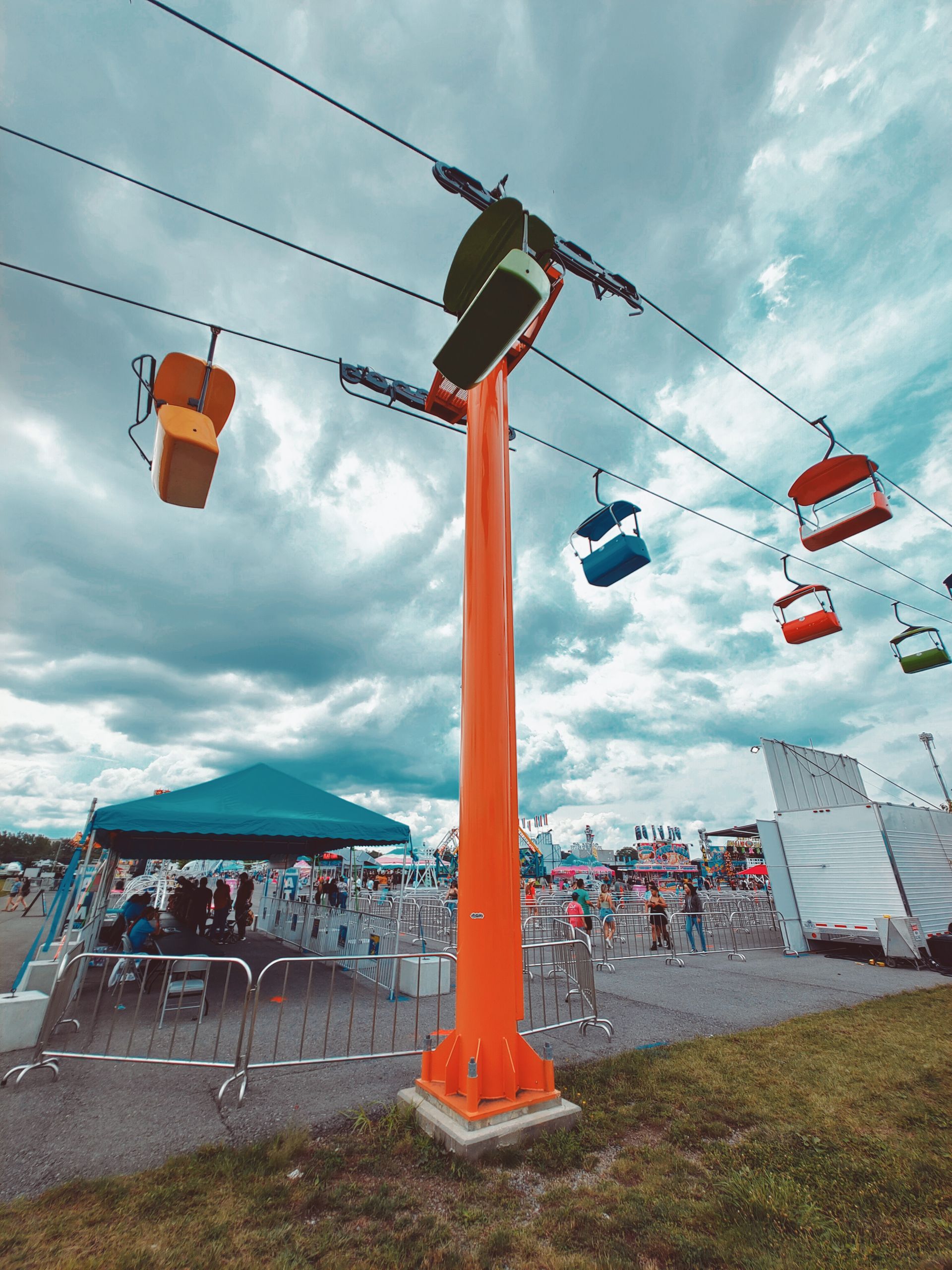
Smith County Kansas Fairgrounds Events
Smith County Fairgrounds in Smith Center, Kansas, are an important gathering place for local agricultural exhibitors, young livestock handlers, families, and residents who want to take part in community events. The annual Smith County Free Fair brings together youth competitions, livestock exhibits, agricultural displays, and activities that reflect the county’s farming and rural traditions.
For visitors planning a trip, the most useful details are the fair calendar, exhibit-entry requirements, parking arrangements, and information about activities scheduled throughout fair week. These details can change from year to year, so visitors should confirm arrangements with the local fair organizers before travelling.
Overview of Smith County Fairgrounds
Location and community importance
Smith County Fairgrounds are associated with Smith Center, the county seat of Smith County in north-central Kansas. Smith Center lies near the junction of U.S. Highway 36 and U.S. Highway 281, making the city a practical point of reference for visitors travelling from other parts of northwest Kansas.
The local government’s tourism information identifies the Smith County Fair as an annual event held at the Smith Center fairgrounds. The grounds provide a setting for agricultural exhibitions and activities that bring together people from across the county.

Agricultural traditions and local identity
Agriculture is central to life in Smith County, where crop production and livestock raising contribute to the local economy. The county fair gives young people and experienced agricultural exhibitors an opportunity to present their work, compare results, and share knowledge with other residents.
The fair also creates a place for families to meet, local organizations to participate, and visitors to experience a traditional Kansas county fair. Historical records show that Smith County agricultural fairs date back at least to the nineteenth century, demonstrating that organized agricultural gatherings have long been part of the area’s community life.
The precise acreage, complete building inventory, original construction date of the current grounds, and seating capacities should be confirmed with the fair organizers rather than assumed.
Upcoming Events at Smith County Fairgrounds
Smith County fair events throughout the year
The main annual attraction is the Smith County Free Fair. Depending on the published program, fair activities may include livestock judging, 4-H exhibits, agricultural displays, youth competitions, and demonstrations of skills developed through local educational and agricultural programs.
Outside fair week, visitors should check whether the grounds are scheduled for meetings, livestock activities, community gatherings, or other events. The existence of a fairground does not necessarily mean that it hosts every type of event commonly found at larger county fair complexes.

How to find upcoming events in Smith County
The Smith County Free Fair’s annual schedule is the most relevant source for dates, competition times, entertainment, and visitor arrangements. The county’s community-event information also identifies the fairgrounds as a venue for the Smith County Fair.
For 2027, the exact fair dates should be treated as unconfirmed until the organizers publish the new schedule. Visitors planning around livestock shows, youth competitions, or family activities should verify the specific day and time rather than relying on the previous year’s program.
Facility rentals and private events
Anyone interested in renting space at Smith County Fairgrounds should contact the organization responsible for managing the grounds. Availability, rental fees, insurance requirements, permitted activities, and access to livestock facilities need to be confirmed directly.
Do not assume that every building, arena, or outdoor space is available for private use.
The Smith County Free Fair
Typical fair season: July
The Smith County Free Fair is a summer agricultural event. Kansas State University Extension’s published 2026 county fair schedule lists the Smith County Free Fair for Thursday, July 16, through Monday, July 20, 2026. Those dates are historical for the 2026 season and should not be used as the confirmed dates for 2027.
The fair’s exact daily timetable, opening hours, and final schedule should be checked when the next program is released.
Livestock shows and competitive exhibits
Livestock competitions are an important part of county-fair culture in Kansas. Depending on the current Smith County premium book, exhibitors may have opportunities to enter beef cattle, swine, sheep, goats, poultry, rabbits, or other approved classes.
Youth and adult exhibitors should read the rules for each department carefully. Requirements may cover entry deadlines, animal identification, health documentation, arrival times, weighing, showmanship, and release procedures.
Other competitive departments may include foods, clothing and textiles, photography, crafts, gardening, and educational projects. The exact classes available at Smith County Fairgrounds must be confirmed through the current fair program.

Carnival, food, and entertainment
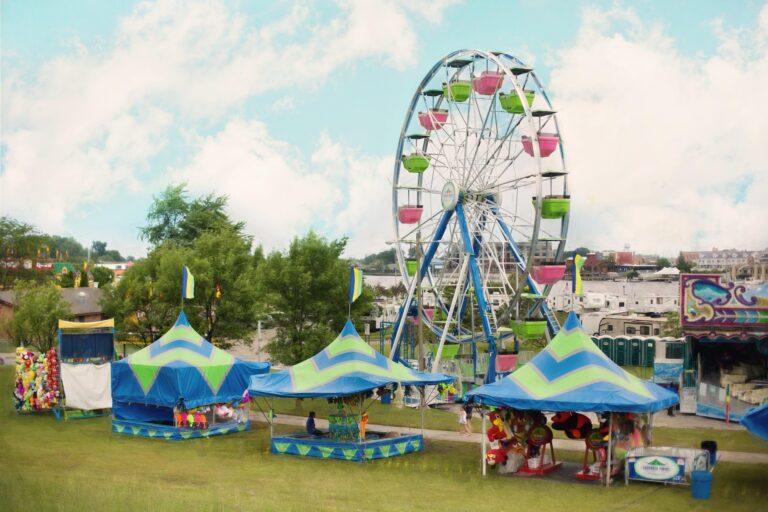
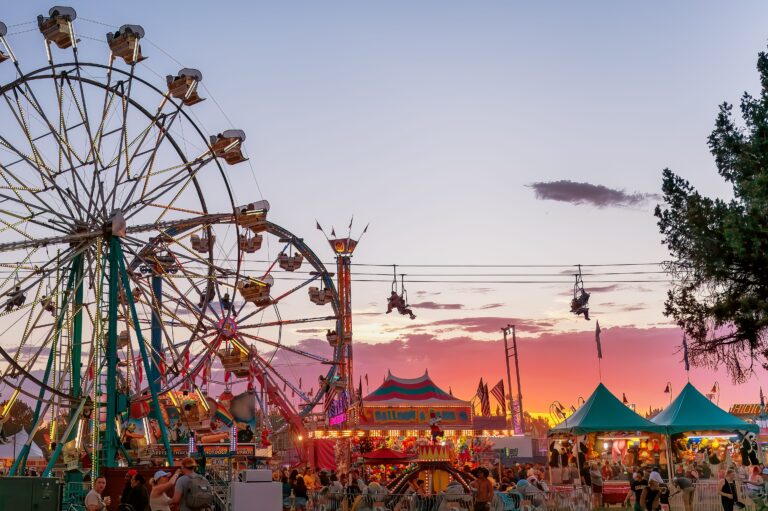
Carnival rides, fair food, and entertainment are familiar features of many Kansas summer fairs, but the availability of each activity at Smith County Fairgrounds depends on the year’s arrangements.
Explore Smith County Kansas Fairgrounds Events for details about county fairs agricultural exhibits livestock competitions and community activities. Visitors can also check Sherman County Kansas Fairgrounds Events for more Kansas fairground information.
Visitors should confirm whether a midway is scheduled, whether ride wristbands are offered, and whether entertainment requires a separate ticket. Food options may be provided by vendors, local businesses, or community organizations, depending on the event.
Admission prices, parking charges, discounts for children or seniors, and season-pass availability should not be assumed from another county’s fair. Check the current Smith County Free Fair information before budgeting for a visit.
Facilities and Grounds
Exhibition areas and livestock facilities
The grounds serve agricultural and community-event purposes, but a complete verified inventory of permanent buildings, livestock barns, exhibit halls, and arena facilities is not available here.
Exhibitors who need particular facilities should confirm whether suitable stalls, pens, wash areas, electricity, water access, and animal-handling equipment are provided. Availability may differ between livestock departments and events.
Parking and accessibility
Visitors travelling to Smith Center should plan their route before arriving, especially when livestock trailers, event traffic, or large crowds are expected.
The location and capacity of public parking, accessible parking spaces, paved routes, accessible restrooms, first-aid arrangements, and any designated drop-off areas should be confirmed with the organizers. Do not assume that every part of the grounds has paved or step-free access.
Camping, RV hookups, overnight parking, and on-site concessions also require direct confirmation before a visit.
Vendor and Exhibitor Information
Applying for a commercial booth
Businesses, artisans, food vendors, and community organizations interested in participating in the Smith County Free Fair should ask the fair organizers whether commercial spaces are available for the upcoming season.
Before applying, prepare a description of the products or services you intend to offer, your space requirements, electrical needs, and any permits relevant to your business. Food vendors should ask about health regulations, food preparation facilities, insurance, and setup requirements.
Vendor fees, application deadlines, booth dimensions, and approval procedures must be confirmed for the specific fair year.
Entering competitive exhibits
Competitive exhibitors should obtain the current fair premium book or department guidelines before preparing their entries. These documents explain eligible classes, judging standards, entry procedures, deadlines, and any awards or premiums.
Livestock exhibitors should pay particular attention to animal identification, health requirements, check-in times, and show schedules. People entering crafts, photography, baked goods, garden produce, or other non-livestock exhibits should check display and delivery instructions.
Getting to Smith County Fairgrounds
Driving directions
Smith Center is accessible via U.S. Highway 36 and U.S. Highway 281. These highways are useful reference points for visitors approaching the county seat from surrounding communities.
Drivers coming from within Smith County can use Smith Center as their destination reference, then follow local directions to the fairgrounds. Travellers from other northwest Kansas communities should confirm the precise entrance and parking arrangements before setting out.
The exact street address and the best approach for vehicles towing livestock trailers should be obtained from the fair organizers. A confirmed address is especially important for visitors unfamiliar with the area.
Public transportation and rideshare
Visitors should not assume that regular public transportation, fair-week shuttles, or rideshare services operate in Smith Center. Ask the organizers whether special transportation arrangements are planned for the upcoming fair.
People travelling with children, older adults, or visitors with mobility requirements should arrange drop-off and pickup details in advance.
4-H and FFA at Smith County Fairgrounds
Youth agricultural education
The county fair provides an opportunity for young people to demonstrate practical skills developed through agricultural education and youth-development programs. In Kansas, 4-H projects commonly include animal science, horticulture, foods, photography, woodworking, and other educational activities.
The local extension service is an important starting point for information about Smith County 4-H enrollment, project requirements, livestock identification, and fair-entry procedures.

Junior livestock auction
Some county fairs include junior livestock sales that allow exhibitors to present animals raised through youth agricultural projects. Buyers may include local businesses, farmers, families, and community supporters.
Whether a particular auction is scheduled at Smith County Fairgrounds, which animal classes are eligible, and how proceeds are distributed must be verified in the current program. Participants should ask about buyer registration, sale order, payment arrangements, and rules for taking possession of purchased animals.
FFA participation should likewise be confirmed with the relevant local agricultural education programs rather than assumed for every school or fair department.
Special Events Beyond the Annual Fair
Smith County has community activities beyond its agricultural fair. Local event listings identify gatherings such as the Lebanon Fourth of July celebration, the Kensington Old Fashioned, the Lebanon Bash, and the Highway 36 Treasure Hunt among the county’s annual events.
These activities should not automatically be described as Smith County Fairgrounds events; their venues vary.
People interested in rodeos, horse shows, tractor pulls, swap meets, flea markets, concerts, or other special entertainment at the fairgrounds should look for a specific announcement confirming the event, date, and venue. The availability of these activities can change from season to season.
Community groups considering a fundraiser or public gathering should ask the grounds’ management about scheduling, facility access, insurance, and event requirements.
History of Smith County Fairgrounds
Agricultural roots in Smith Center
Smith County has a documented history of organized agricultural fairs extending back to the nineteenth century. A historical fair poster preserved by the Kansas Historical Society records the fourteenth annual fair of the Smith County Agricultural Society, scheduled for August 31 through September 3, 1886, at Smith Centre, the historic spelling of Smith Center.
The advertised program included speakers, a band contest, a balloon show, livestock and produce displays, and sulky racing. It also referred to a regional fair circuit connecting communities including Osborne, Phillipsburg, Norton, and Cawker City.
This record establishes that organized agricultural entertainment was already a feature of Smith County life in the 1880s. It does not, by itself, establish the construction date of the present fairgrounds or prove that today’s facilities occupy the same site.
How the fair has developed
Agricultural fairs have traditionally combined livestock evaluation and produce exhibitions with entertainment, social gatherings, and youth education. The Smith County Free Fair continues this broader county-fair tradition by providing a setting for local participation and agricultural learning.
Specific claims about record attendance, major renovations, notable visitors, cancellations, or the opening dates of individual buildings require additional historical documentation. These details should not be published as facts without supporting records.
Frequently Asked Questions
When is the Smith County County Fair in 2027?
The confirmed 2027 dates should be obtained from the fair organizers. The 2026 Smith County Free Fair was scheduled for July 16–20, making July a useful seasonal reference, but the dates should not be assumed to carry over.
What time does Smith County Fairgrounds open?
Opening hours depend on the event and the day’s schedule. Visitors should check the published program before travelling, especially when attending a particular livestock show or competition.
Is there camping at Smith County Fairgrounds?
On-site camping and RV hookups have not been confirmed. Contact the fair organizers to ask about camping permissions, electrical connections, water access, overnight parking, and nearby alternatives.
How do I enter livestock in the Smith County Free Fair?
Start by obtaining the current fair premium book and contacting the local extension service. Check animal identification, health requirements, registration deadlines, check-in procedures, and showmanship rules before bringing an animal to the grounds.
Are dogs allowed at Smith County Fairgrounds?
The current animal-entry and visitor policies should be checked before bringing a dog. Rules for service animals, pets, livestock areas, and show animals may differ.
Where do I park at Smith County Fairgrounds?
Use the designated parking areas identified in the current event instructions. Visitors towing trailers or requiring accessible parking should contact the organizers for the appropriate entrance and parking arrangements.
Who do I contact to rent Smith County Fairgrounds?
Contact the organization managing the fairgrounds to ask about availability, rental fees, insurance, facility restrictions, and booking procedures. The specific rental contact should be confirmed before making plans.
How much does it cost to get into the Smith County Free Fair?
Admission prices for the next fair have not been confirmed here. Check the current schedule for gate admission, children’s pricing, special admission days, season passes, and any separately charged attractions.
What activities are available at Smith County Fairgrounds?
Activities depend on the annual schedule. Agricultural fairs commonly feature livestock judging, youth exhibits, educational displays, and other community activities. Confirm the current Smith County program for specific competitions and entertainment.
Where is Smith County Fairgrounds located?
The fairgrounds are associated with Smith Center, Kansas, the county seat of Smith County. Visitors should confirm the exact street address and entrance before travelling.
Can local businesses sell products at the county fair?
Potentially, depending on vendor availability and the fair’s rules. Interested businesses should ask the organizers about applications, fees, permitted products, insurance, setup times, and deadlines.
One Comment